



If you want your personal injury firm to rank higher on Google and sign more of the cases you want, these are the eight SEO tactics I’d prioritize. They’ve worked for years, and several can now help prospective clients find your firm through Google’s AI Overviews and assistants like ChatGPT.
At Pioneerly, I lead personal injury SEO for some of the country’s most respected firms. My team and I see firsthand which searches bring those firms qualified leads and which leads turn into signed cases. I weigh those results alongside the legal market data we collect and the field research we conduct across the U.S. when deciding where to invest a firm’s SEO budget.
For each tactic, I’ll show you how to spot the opportunity on your site or in your market and what I’d do about it. By the end, you should be able to look at your firm’s SEO plan and decide what to tackle first, what to stop spending money on, and where you have a real chance to outrank competitors for the cases you want.
1. Build comprehensive practice pages around the injury cases you want to sign
This advice might sound basic, but you wouldn’t believe how many firms are missing out on better rankings because their case type pages are thin and barely relevant to the cases they want. They add a few generic statements and a couple of images, then move on. A well-built practice page can rank on Google and give AI assistants a reason to cite your firm.
Start with a decision only the partners can make. If organic search brought you ten more cases next quarter, which ten would you want? A firm investing in commercial truck litigation needs a page that can compete for trucking cases in its market. Another month of general car accident articles won’t do much for that goal.
Sit down with an attorney who handles truck accident cases and ask them to walk you through the first call after a delivery truck hits someone. When they say, “I ask who owned the truck,” follow up with, “Why does that matter, and what do you do once you know?” Use their answer to write a section titled “Who could be responsible for a delivery truck accident?” Explain how your firm identifies the owner and checks whether the driver was making a delivery when the crash happened. Then ask what evidence the attorney would want to preserve first. If they mention footage from a nearby business, explain why it can disappear and what someone can do now to help the firm locate it. Work through the page this way, replacing generic claims about your experience with specific examples of how your attorneys handle these cases.
Repeat this process for every priority case type.
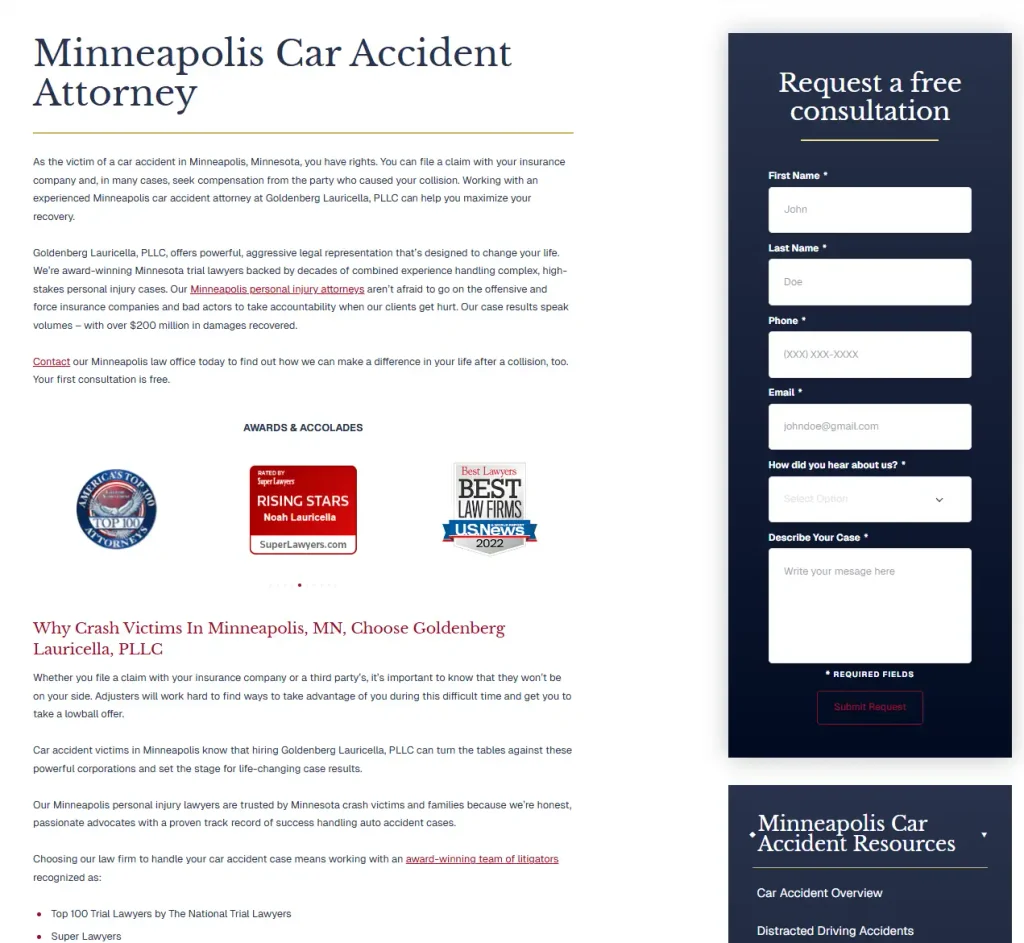
Choose a specific search for each practice page
Start with the search you want the page to rank for. If your firm wants more truck accident cases in Tucson, “Tucson truck accident lawyer” is a natural page title. Someone making that search wants to know whether your attorneys have handled a crash like theirs. Give them a case from your own practice. Explain what made it complicated, what your attorney did, and how the case turned out. Link to the full case result and the attorney’s bio so readers can look into both.
Use a different outline for a Tucson rideshare accident page. Someone hit by an Uber driver may want to know why the insurance company keeps asking whether the driver had accepted a ride. Have your attorney explain why that detail matters and how it affects which insurer the firm contacts. That’s the level of specificity I’d look for on each practice page.
Reclaim the time you’re spending on accident news
Before you pay for another month of local crash reports, find out what the last batch did for your firm. On November 26, 2026, I searched Google for “personal injury lawyer” plus the city name in ten U.S. metros. I reviewed three high-ranking law firm websites in each market, skipping legal directories. Twelve of the 30 published stories about crashes the firm hadn’t handled. If you’re taking cues from a competitor, check which page actually ranks. If its truck accident page shows up for the cases you want, that’s the page worth studying.
To see what your own crash reports contribute, open the Performance report in Google Search Console, select the last 16 months, and filter by the URL of a crash post. Look at the searches that brought people to it. Someone searching for details of a particular crash has a different reason for visiting than someone searching for a truck accident attorney. If you track calls and forms by landing page, check whether anyone who first visited that post went on to contact the firm about a case you’d take.
Before removing a crash post, check whether a local newspaper or road safety group links to it and read the passage around the link. If a newspaper cites your account of a specific crash, keep that account available at the same URL. If several posts cover crashes at the same intersection and people find them by searching for information about its safety, combine the useful reporting into one page and set up a 301 redirect from each old URL to the new page.
For any other post you decide to retire, choose the closest relevant page on your site and set up a 301 redirect. For example, if you’re retiring a short report about a delivery truck collision in Tucson, your Tucson truck accident page may be a good destination if it explains how your firm handles that kind of crash. If there’s no page that answers a related question, don’t force a redirect to the homepage. Put the next writing assignment toward a practice page for the cases your firm wants to sign.
2. Turn closed cases into original website content competitors can’t publish
Your closed cases give you something most personal injury websites are missing: firsthand evidence to back up the advice you publish. When an attorney explains which medical record helped resolve an insurer’s objection, a prospective client can see how your firm handles a disputed claim. A journalist or an AI assistant can also cite your firm for a detail that came directly from your work, earning you backlinks. In Cyrus Shepard’s 2026 analysis, 92.9% of sites gaining search traffic had a proprietary asset, compared with 57.1% of sites losing traffic. For a personal injury firm, one of those assets is its own case history.
Turn a recurring intake question into a guide and a case result
Start with a question your intake team hears regularly. For example, someone who’s been rear-ended might ask, “I already had back pain before the crash. How can I show it got worse?” Ask an attorney to choose a closed case where the insurer raised that issue. What did the client’s earlier medical records show? What could the client do at work before the crash that they struggled to do afterward? Which piece of evidence made the difference, and why?
Use the attorney’s answers to write a guide that addresses the original question. Explain how they compare symptoms before and after a collision, what they look for in the records, and what someone in that position should bring to a consultation. If the attorney says the same objection comes up often, check that observation against a larger set of comparable closed files. Reporting how many times the insurer raised it, how many files you reviewed, and what period they cover gives readers a finding they can attribute to your firm.
Then publish the individual case as a result. Suppose the client was a delivery driver and the insurer blamed their back pain on years of lifting. Where the file supports it, explain what the earlier records showed, why the attorney sought an orthopedic opinion, and whether it changed the negotiation. Give the outcome and how long it took. A settlement figure means more to a prospective client once they understand what the attorney had to establish to get there.
Have counsel confirm what the firm has permission to share and how it can present the result. Then link to the case from the paragraph in your guide that explains medical evidence. That’s the moment a reader is most likely to want a real example. On the case result, name the attorney who handled it and link to the relevant practice page so someone facing the same dispute can reach the right team.
3. Use internal links to help priority practice pages rank and bring in cases
Internal linking is one of the first things I check when a personal injury firm’s guides are bringing in search traffic but a practice page is struggling to rank. In my own SEO work, I’ve seen practice pages gain massive amounts of organic clicks after we linked to them from relevant guides the firm had already published. It’s a change I like because it does two jobs. A descriptive link helps Google understand which page covers a particular type of case, and it gives someone reading the guide a direct route to the attorneys who handle it.
Start with one practice page for a case type you want more of. In Google Search Console, look at the searches already bringing people to your site for that subject and see which pages earn the clicks. Say you want more truck accident cases and find that one of your guides ranks for “how long do trucking companies keep dashcam footage?” Read the guide until you reach the point where someone might reasonably want a lawyer’s help. That’s where the link belongs.
Build a better case acquisition system for your law firm.
Tell us about your firm and your goals. We’ll give you our honest take on how to get there.
For example, after explaining how footage can be overwritten, you could write, “Our truck accident attorneys can help you identify who has the footage and request that it be preserved.” Link the words “truck accident attorneys” to your trucking practice page. If the firm has a published case showing how its attorneys recovered footage, link to that result where you discuss the evidence. Each link gives the reader a clear reason to follow it.
When I review the results, I look for two things. First, is the practice page gaining impressions and clicks for the searches we want it to rank for? Second, are people following the link from the guide, and do any of those visits lead to qualified calls or signed cases? Search Console helps answer the first question. For the second, we use website analytics and intake records where we can connect the visit to an inquiry. Zyppy’s analysis of 23 million internal links also found an association between internal links and organic clicks. For a managing partner, the more useful measure is whether those links are bringing prospective clients to the part of the practice you want to grow.
4. Earn local news coverage with original accident data and attorney commentary
If you want local journalists to mention your firm, bring them something they can report. A citywide total of pedestrian crashes is public information. A map showing which intersections account for the largest share of pedestrian injury crashes over five years gives a transportation reporter a story, particularly if the city is about to vote on safety improvements at one of them.
Pick a question with a local audience and use the state or city’s crash records to answer it. Publish the location, date range, source, inclusion criteria and any reporting lag alongside the findings. Be precise about what you measured. An intersection with the most reported crashes may also carry the most traffic. Calling it the city’s “most dangerous” requires evidence about risk that a raw count can’t supply.
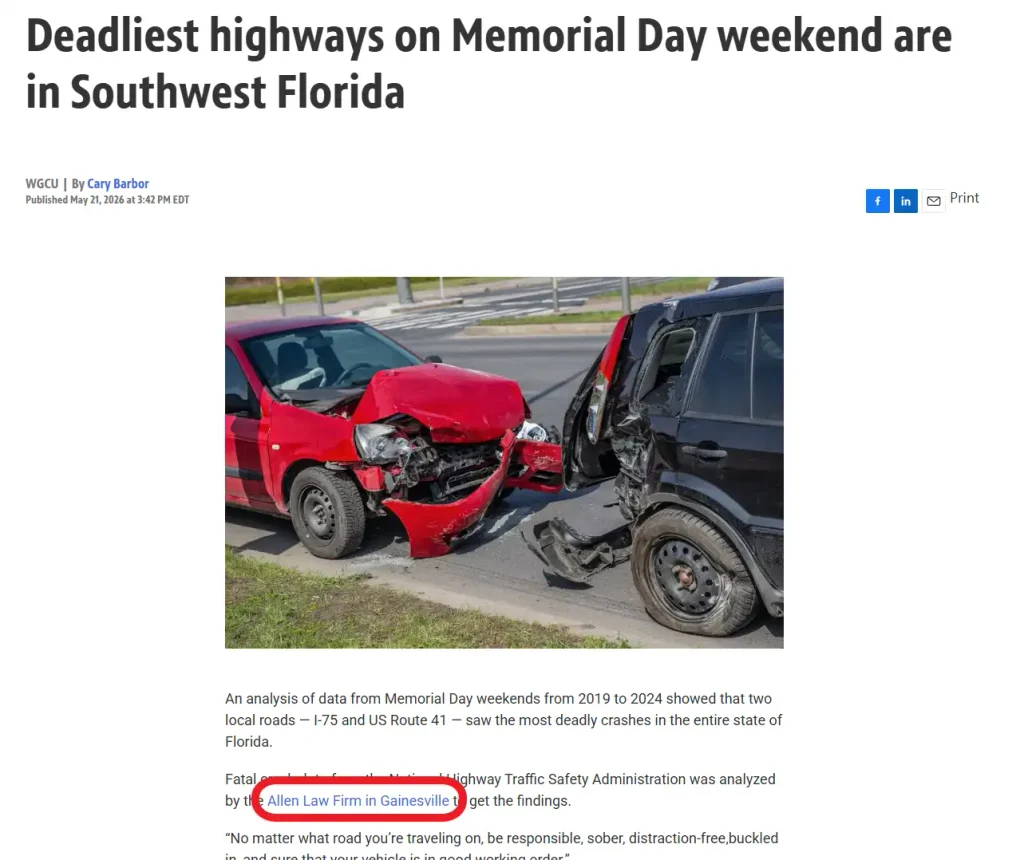
Pitch the finding to the reporter who covers that road or city council. Give them the map, the underlying figures and the name of an attorney who can explain what the records show. Make the research available at a stable URL they can cite. Hennessey Digital’s examples of data-driven legal PR show how a timely question about driving can give a local outlet a reason to cover a firm’s work.
Between research projects, assign one attorney to answer relevant reporter requests quickly. A short explanation of why a trucking investigation may involve more than the driver is more usable than a paragraph about the firm’s credentials. Coverage can be worthwhile even when the newsroom omits a link. Ahrefs’ study of 75,000 brands found that web mentions correlated with visibility in AI Overviews. For the firm, there’s also a more immediate benefit: local readers encounter an attorney explaining an issue they care about.
5. Earn backlinks from relevant pages that already attract search traffic
When I review a link-building proposal, I ask for the URL where the firm would appear. A publisher’s domain rating and total monthly visits tell me little about who reads that particular page. For a firm building a bicycle injury practice, I’d pursue a link from a cycling group’s well-read guide to local crashes. I can explain exactly why one of its readers would follow that link to the firm’s checklist for obtaining a crash report.
Evaluate the referring page before you pitch
Search the questions your prospective clients ask before they look for a lawyer. In the cycling example, try searches about reporting a bike crash in your city or requesting a copy of the report. Look for established resources from cycling groups, road safety organizations, local publishers and professional associations. You can also inspect the backlinks to a competing firm’s most useful guides and see who already cites material like yours.
Open each promising URL. Check what the article covers, who reads it and where your resource would help. Then put the exact page into Ahrefs or Semrush and inspect its estimated organic traffic, the queries behind it and the trend over time. A guide that ranks locally for bike crash reporting reaches a better audience for this purpose than a popular cycling article whose traffic comes from people shopping for shoes. Traffic estimates can miss small local audiences, so a strong referral source can still merit your time even when a tool has little data.
This is consistent with Semrush’s 2026 link-building guidance, which evaluates relevance down to the paragraph containing the link. In Editorial.Link’s 2026 survey of 518 SEO professionals, 67.2% flagged low relevance when judging a potential linking site, and 63.9% flagged declining organic traffic.
Give the editor a reason to add the link
Be specific about what your page contributes. If the cycling group’s guide tells riders to request a crash report but leaves them to figure out which agency has it, show the editor the section of your checklist that answers that question. Link to the checklist itself. From there, readers who need help can reach the attorney who handles bicycle claims. In the monthly report, ask to see the referring URL, the destination, any referral visits or inquiries, and how the destination is performing for its target searches. A list of publisher logos won’t tell you any of that.
6. Build small calculators, tools, and worksheets for the clients you want to reach
A small tool can earn search traffic from people who need help with exactly the kinds of cases your personal injury firm handles. Someone searching for “how much will I keep from my settlement?” already has a number they want to work with. A calculator lets them enter their offer and see what they’d take home. That’s the SEO opportunity. The page answers a specific search, and it gives other attorneys, journalists, and consumer organizations a useful resource to link to when their readers have the same question.
I’d choose the audience before choosing the tool. Ask your intake team which calculations they regularly walk callers through. If clients often call with a settlement offer in hand, build a settlement breakdown calculator. If your firm represents hourly workers who struggle to document missed shifts after an injury, a lost-wages worksheet may be more useful. Most of the firms already winning in search are leaving this opportunity open. When I reviewed 30 high-ranking personal injury websites across ten U.S. metros, only two offered an interactive tool, and both estimated case value. A settlement breakdown calculator or a lost-wages worksheet gives your firm a chance to win relevant search traffic those websites are doing little to compete for. The people making those searches already have an offer to evaluate or missed pay to document.
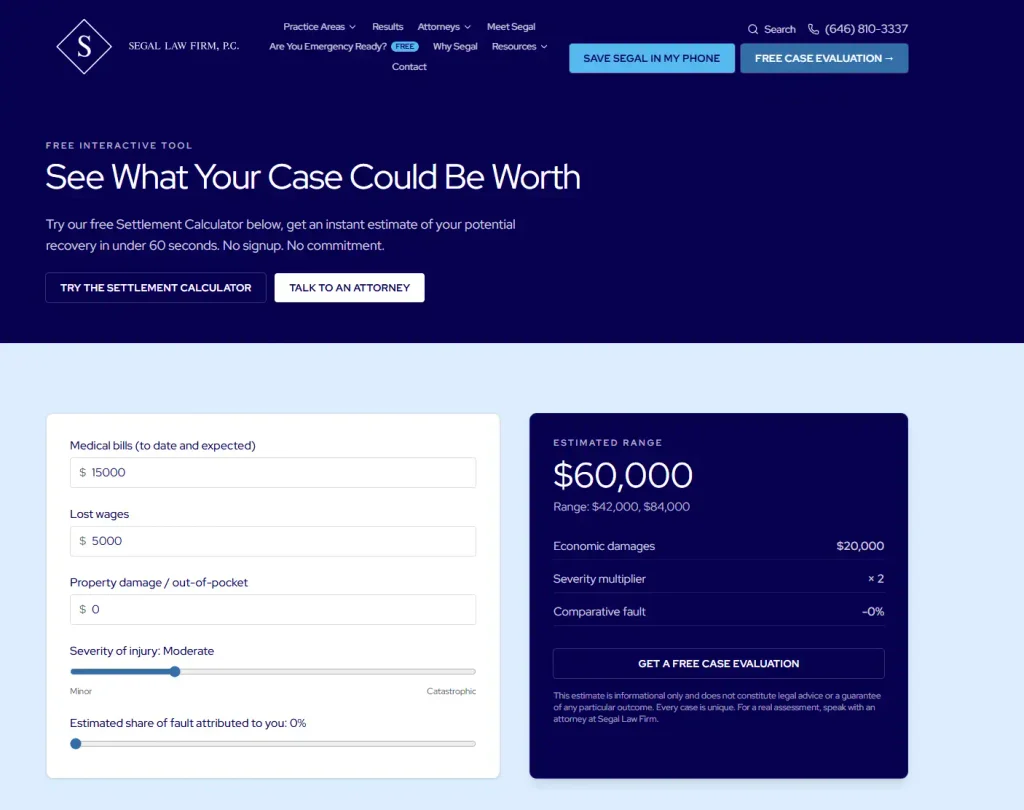
Keep the first version simple. For a settlement breakdown calculator, let visitors enter the offer, attorney fee, case expenses, and medical liens. Show each deduction and the estimated amount they’d receive, without asking for an email address. Give the calculator its own page, use the question it answers in the title, and put a worked example beside it. Explain whether the fee is calculated before or after expenses and how a different agreement would change the result. Those details give the page useful text that Google can index and an AI assistant can cite.
Once it’s live, link to the calculator from your fee page and from any guide that discusses settlement offers. Track which searches bring people to the page, how many visitors use the tool, and whether any go on to contact the firm about a case you’d take. Those are the numbers I’d want to see before investing in a second tool.
7. Publish your fees to reach people searching for what a personal injury lawyer costs
Someone searching for “how much does a personal injury lawyer cost in Arizona?” may already be deciding which firm to call. That’s search traffic I’d want for an Arizona injury practice. A dedicated fee page gives your firm a chance to rank for that question and answer the one that follows: “What would it cost to hire you?” Your firm is the firsthand source for that answer. Publishing your actual terms also gives AI assistants a page they can cite when someone asks what you charge.
Most of the firms I reviewed leave that second question unanswered. Out of 30, only two disclosed their own fee. Twelve quoted an industry range without saying where the firm fell within it, and 16 gave no figure at all. “No fee unless we win” tells a prospective client when you collect an attorney fee. They still need to know how much you collect when you win and who pays the case expenses if you lose.
Put your percentage first, then show what the client takes home
Build the page from the agreement your clients sign. Lead with the percentage you charge and explain when it changes. If you charge one rate before filing a lawsuit and another after filing, give both figures. Then explain whether you calculate the fee before or after deducting case expenses, who advances those expenses, and who owes them if there’s no recovery. If your terms vary by case type, tell readers which terms vary and when you’ll confirm their fee.
Show the math with an example that reflects your agreement. Here’s how a firm that charges one-third of the gross recovery could illustrate a $90,000 settlement.
| Settlement | $90,000 |
| Attorney fee (one-third of gross recovery) | −$30,000 |
| Case costs | −$4,000 |
| Medical liens paid from the settlement | −$11,000 |
| Amount the client receives | $45,000 |
Link to the fee page from each relevant practice page, right where you invite someone to schedule a consultation. “See what we’d charge and how much you’d keep” gives a reader a clear reason to follow the link. If you’ve built a settlement breakdown calculator, put it beside the example so visitors can run their own numbers. Have the attorney responsible for your fee agreement review both whenever the terms change.
8. Win local searches in Spanish and the other languages your clients use
Choose a language the same way you’d choose a practice area to grow. Look at the communities your office serves, the languages callers request and the cases your team can handle in that language. Spanish is a substantial opportunity in many U.S. markets. In another service area, the stronger opportunity might be Vietnamese, Korean, Mandarin or Arabic. Look at local language data alongside intake records. English-only intake can hide demand because callers who can’t get through rarely become entries in your case management software.
In Phoenix, two of the three high-ranking firms in my review had no Spanish pages. Across all ten markets, nine of 30 had none and another seven offered only limited Spanish content or a brief mention of language support. If your office can handle a case in Spanish, a visitor should be able to discover that through the same searches they’d use to choose an English-speaking attorney.
Research the searches in the language you’ll serve
Ask bilingual intake staff how callers describe their crashes. “Abogado de accidentes de carro” and “abogado de accidentes de auto” are both plausible starting points. Check which terms people use in your market and what appears in the results. Look at local keyword estimates and the Spanish queries already earning impressions for your site. Repeat that process with a fluent researcher for each language you support. A literal translation of an English keyword list can miss the phrase your own clients use.
Start with one complete route from search to intake. For a firm seeking truck accident cases, that might include a Spanish trucking page, a related case result, the fee explanation, the attorney’s bio and a consultation form. Give each language its own URLs, link corresponding versions and implement reciprocal hreflang annotations so search engines can identify the alternatives. Have a fluent legal reviewer check the terms clients will be asked to act on.
Which personal injury SEO tactic should your firm prioritize next month?
Start with one case type your partners want more of. In Search Console, look at the searches that bring people to your site for that type of case and the pages they land on. Then ask intake how many inquiries about those cases came from organic search, how many were a fit, and how many became signed matters. Where your tracking allows, connect the calls and forms to their landing pages. You’re looking for the first place your firm is losing a case it could reasonably win.
If your firm rarely appears for searches about that case type, start with the practice page. Look at which questions the competing pages answer and what your attorneys can add from cases they’ve handled. If your guides already earn relevant clicks but few readers reach the practice page, improve the internal links. If your page answers the important questions well, look at who links to the firms outranking you. A local publication or industry association that regularly cites a competitor’s work may also have a reason to cite yours.
When the right people are already finding the firm, test what happens next. Hand your website to someone outside the practice and give them a task that matters to an actual client: “You’ve received a $90,000 settlement offer. Can you find out what we’d charge?” Or ask them to book a consultation in Spanish and see whether they can get all the way through the form or phone menu. Compare where they hesitate with what your intake team hears on calls. That gives you a specific fix to make, whether it’s publishing your fee terms or making sure a Spanish-speaking caller can reach the right person.
Before you approve next month’s SEO work, ask whoever owns it to finish this sentence: “We expect this change to help us sign more of these cases because…” Then agree on the first result you’d expect to see. For an internal link, that could be more readers moving from a high-traffic guide to the relevant practice page. For a Spanish booking form, it could be more completed consultations in Spanish. Track that result first, then follow those inquiries through to signed matters. That’s how I’d decide whether the work deserves another month of your budget.
To see how SEO fits alongside paid search and referrals in bringing more cases to your firm, read my personal injury law marketing guide. If you’d like my team to manage the SEO strategy for your firm, visit Pioneerly’s personal injury SEO plan page.