




New York has been one of the centers of the American legal profession for generations.
Some of the largest and most influential law firms in the world were built here. So were thousands of small practices, specialist boutiques, neighborhood firms, trial shops, and family businesses that happen to practice law. The city has its own court culture, professional networks, rules and habits, and more than a few legal peculiarities that make perfect sense once you’ve practiced here long enough.
I knew very little of this when I decided New York would be Pioneerly’s home. What I did know was the city itself, from a handful of visits over the years and, before that, from the version of it I had carried around since I was a kid.
Growing up in Poland in the ’90s, New York was America as you saw it from far away, in movies and on TV. It stood for ambition, opportunity, business, culture, and the idea that you could show up from somewhere else and build something that mattered. That picture stuck with me. When I eventually came to the United States as a first-generation immigrant, Miami became my first American home, and I still love it. But New York kept its place in my head. Now that I’m spending real time here and getting to know the city beyond the image I grew up with, I understand why it got into my head in the first place.
Choosing the city for our HQ was the easy part. Understanding the local legal community we wanted to serve was a different job. Data, rankings, firm websites, market research and conversations about marketing could only take me so far.
I had to get closer to the profession itself. Build my own network here. Spend time with attorneys who have practiced in New York for years and hear how they think about their work, their firms, their clients, the courts, and the changes they’ve lived through. If Pioneerly was going to become part of this community, I wanted to understand it from the inside.
And I had plenty I wanted to understand. How does practicing law in New York actually feel today? What has changed over the last decade? What got easier, and what got harder? How have clients changed? How much did the pandemic permanently alter the way firms operate? What happens when a profession built on precedent runs into technology that reinvents itself every six months?
And which parts of practicing law in New York have barely changed at all?
This article became part of my learning process.
I spoke with four New York attorneys from very different corners of the profession and asked them to look back over the last ten years. Their practices have little in common on the surface. They work in employment law, estate planning and elder law, family law, and litigation. Their firms are different. Their clients are different. Their day-to-day problems are different.
But as I listened to their answers, the same themes kept appearing.
The practice of law has become faster, more competitive, more visible, more technology-dependent, and in many ways more complicated to run as a business. Clients arrive with more information and higher expectations. The office means something different than it did in 2016. Marketing has become part of competition in a way many lawyers still don’t like admitting. And now AI has entered both sides of the attorney-client relationship.
Yet underneath all of that, the qualities that seem to matter most haven’t changed much.
Judgment. Trust. Communication. Specialization. Knowing your client. Knowing when the obvious answer is the wrong one.
This isn’t meant to be a definitive history of practicing law in New York.
It’s my attempt to understand how one of the most important legal communities in the world got from 2016 to 2026, with some help from people who actually spent the decade practicing here.
New York has been a legal city for a very long time
There is something almost funny about trying to write about ten years of legal change in a place where the New York Supreme Court traces its roots to 1691. The city has been arguing professionally for more than three centuries.
Alexander Hamilton opened a law office on Wall Street after the Revolutionary War. Benjamin Cardozo helped make New York’s Court of Appeals one of the country’s most influential common-law courts. Much later, Chief Judge Judith Kaye pushed the system toward specialization and modernization, including the creation of the Commercial Division in the 1990s. The names change, the buildings change, and the technology changes, but New York has been using law to organize commerce, power, family, property, and conflict for a very long time.
The court system itself still carries the accumulated weirdness of that history. The Supreme Court is a trial-level court. The Court of Appeals is the highest court. If you want a divorce, you go to Supreme Court, not Family Court. Practice can change by county, department, judge, and part. Knowing the rules is one thing. Knowing how New York actually works is another.
I wanted to look back at the last decade, and 2016 is a convenient point for this story to begin. That July, New York began administering the Uniform Bar Examination, while keeping a separate New York law course and exam for admission. Ten years later, New York is already preparing to replace the UBE with the NextGen bar exam in 2028.
The profession itself has grown too. According to the court system’s 2025 annual report, the number of New York-admitted attorneys located inside the state rose from 175,195 in 2015 to 193,536 in 2025. That’s roughly 11 percent growth in a market that was already famously crowded.
Crowded is measurable. In Pioneerly’s U.S. Legal Market Health Index, which ranks all 50 states and DC on conditions for law firm growth, New York scores 75 on demand, sixth highest in the country, and 18 on opportunity, which places it among the eight most saturated legal markets in America. Plenty of clients, and plenty of lawyers competing for every one of them.
But headcount isn’t the most interesting change. The bigger change is that the job around the law has expanded. The lawyer of 2026 is still expected to know the law, but also to understand software, cybersecurity, digital evidence, online reputation, intake, client communication, remote work, AI, and the economics of running a modern firm.
Legal work got faster. Litigation often didn’t.
Technology has made a lot of legal work faster. Filing is digital. Meetings can happen online. Evidence is easier to collect and review. Legal research is faster than it was a decade ago. But the pace of litigation itself hasn’t changed nearly as much.
New York County Supreme Court was already well into mandatory electronic filing before our ten-year window for this article, but the appellate courts kept expanding the system over the last decade. The First Department began NYSCEF e-filing in 2018 and progressively expanded it until, by 2024, e-filing was mandatory in nearly every matter before the court.
Then came 2020. New York’s courts did something that would have sounded unrealistic only weeks earlier. Jury operations stopped, essential matters moved to video, and by April 6, essential and emergency matters across the state were being heard virtually. The pandemic didn’t invent remote law practice, but it forced the entire system to prove that a surprising amount of legal work could happen without everyone being in the same room.
William K. Phillips sees both sides of that change. His employment cases now involve electronic filing, remote depositions, videoconferencing, searchable databases, and far more digital evidence than they did a decade ago. Texts, Slack messages, Teams chats, call logs, calendars, metadata, social posts, and surveillance footage can all become part of the case.
“Technology makes it easier to collect and review that evidence,” as William puts it, “but it does not necessarily make the case move faster.”
Discovery, depositions, summary judgment, and appeals can still take years. Technology has made it much easier to move information and handle the work around a case, but the courts still operate within the same basic constraints of calendars, procedure, overloaded dockets, and due process. So firms can work faster without the case itself moving much faster.
The client on the other side of the desk has changed even more
Clients don’t come to lawyers the way they did ten years ago.
William remembers a practice where clients mostly came through personal referrals, other attorneys, and traditional advertising. Today, he says a potential client may research five firms before contacting one. They read reviews. They look at case results. They watch videos. They compare lawyers. And increasingly, they ask AI who they should hire before the lawyer ever knows the person exists.
Vlad Portnoy gave me an even better example because it happened during the consultation itself. He was on Zoom with prospective clients while, unknown to him, they were running an AI app on another device and checking his answers in real time. They only revealed it when the AI disagreed. Vlad explained the issue. The AI changed its answer. They hired him for a limited purpose and, as he tells it, probably used AI for the rest.
A decade ago, a lawyer worried about the second opinion from another lawyer. In 2026, the second opinion can be sitting silently on the client’s phone.
That changes the nature of consultations with clients. They can show up with more information, but not always more understanding. They can read statutes, forum posts, verdict reports, Reddit threads, law-firm pages, and AI summaries before meeting with a lawyer. Some of that information is excellent. Some of it is incomplete. Some of it is wrong. All of it shapes expectations.
William sees this in employment case valuation. Public verdicts are easy for AI systems to find. Confidential settlements, dismissed cases, failed trials, weak claims, and matters that never became public are much harder or impossible for them to see. An AI model can therefore produce a very confident number from a badly distorted sample.
His example is one of his own cases. Phillips & Associates obtained a $2.31 million jury verdict in Sooroojballie v. Port Authority of New York and New Jersey. After remittitur, the final recovery was about $400,000. A system that finds the headline verdict but misses what happened later can learn the wrong lesson from a real case.
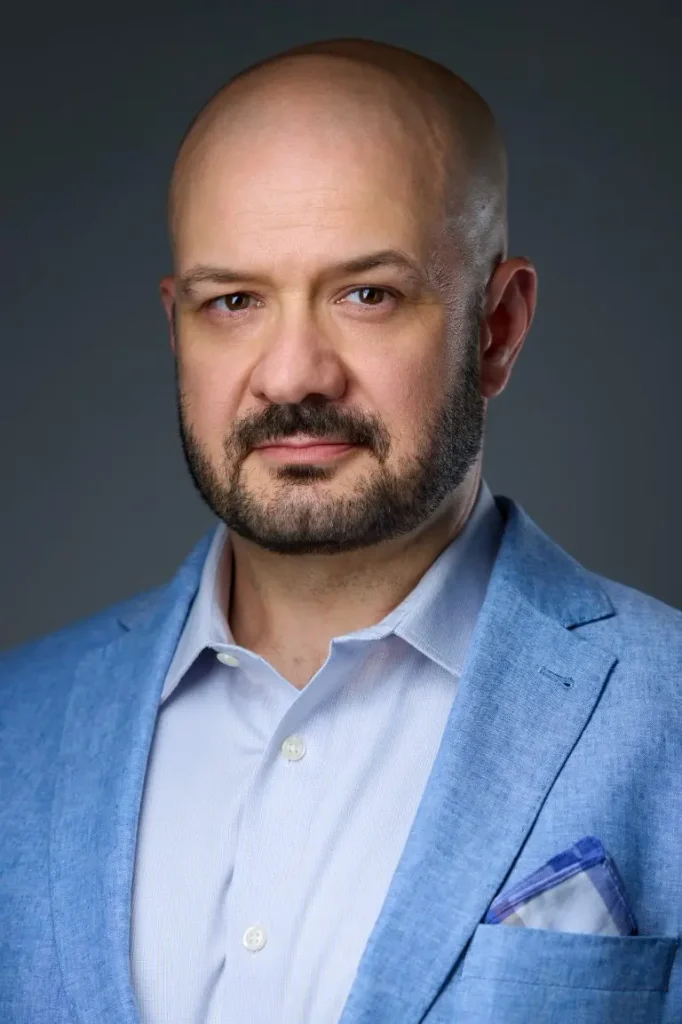
Matt Bryant comes at the same client shift from a different direction. For all the new tools, the complaint he hears most often from people unhappy with previous counsel is still remarkably old-fashioned: they didn’t hear from their lawyer.
“The number one concern I hear from new and prospective clients about prior counsel, by a wide margin, is a lack of communication and feeling ignored,” Matt told me.
That may be the defining contradiction of modern legal service. We have more ways to communicate than at any point in history, and clients can still feel completely abandoned.
Law firms now compete on legal ability and on being found
This is the part of the story closest to my day job.
A law firm can be excellent and invisible. It can also be highly visible and much less capable than its website suggests. Ten years of Google, reviews, paid search, social media, video, directories, and now AI recommendations have widened the distance between legal reputation inside the profession and perceived reputation outside it.
William put it plainly: firms are no longer competing only on legal ability. They are also competing for visibility. In plaintiffs’ employment law, he says client acquisition has become much more expensive, while a polished online presence can make a small or inexperienced operation look formidable.
That’s not an argument against marketing. It’s an argument for understanding what marketing can and can’t prove. A polished website can make a small or inexperienced firm look formidable. A great website can also communicate real depth, experience, resources, and credibility. The problem is that very few law firm websites do that well enough for a potential client to tell the difference.
Vlad sees another form of competition. Years ago, his obvious non-lawyer competitor in estate planning was a service like LegalZoom. Now AI can produce documents that look far more sophisticated than the cheap form kits people bought online. It can also help lawyers in adjacent practice areas produce work that is better than the old three-page template they inherited from a former boss.
That doesn’t make specialization less important. If anything, Vlad and William both argue the opposite. When the baseline legal product becomes commoditized, the value shifts toward judgment, context, edge cases, strategy, and knowing what not to do in different circumstances.
Build a better case acquisition system for your law firm.
Tell us about your firm and your goals. We’ll give you our honest take on how to get there.
The rules around lawyer marketing are changing too. Effective June 1, 2026, New York’s four Appellate Divisions overhauled Rules 7.1, 7.3, and 7.4 of the Rules of Professional Conduct, simplifying a framework that had long been unusually detailed about lawyer advertising and solicitation.
That change feels very 2026. The old model tried to regulate specific formats. The modern problem is that the formats keep multiplying. A potential client may see a Google result, a review, a short video, a podcast clip, a LinkedIn post, a ChatGPT answer, and a firm’s intake text before ever speaking to a lawyer. The “marketing” is no longer one ad. It’s the entire trail of evidence the firm leaves behind.
At Pioneerly, this is why we treat marketing and intake as one system rather than separate functions. Law firms generally don’t want multiple vendors managing different parts of the client journey. They want continuity, clear accountability, strong outcomes, and confidence that everything stays within the ethics rules.
They also know that when different parts of that journey are handled by different vendors, the client experience can become inconsistent. What a firm promises online has to match what happens after the first call, because both are part of the same brand.
Running a law firm has become more complex
Running the business has always been part of running a law firm. What’s changed is the number of things managing partners are now expected to understand and oversee.
Matt’s first observation about the last decade was simple: “there is simply more to manage today.” Technology, vendors, cybersecurity, staffing, data, client communication, marketing, and internal processes all compete for attention alongside the legal work itself.
William sees the same thing from the managing partner’s chair. Practicing law is only one part of the job. You also have to hire and train good people, manage the finances, keep up with technology, protect client information, maintain service standards, and make sure the firm can actually deliver what it promises.
That burden looks different by practice model. A contingency-fee firm may spend for years before getting paid. William’s firm has to cover lawyers, paralegals, experts, litigation expenses, insurance, technology, advertising, and New York real estate while some cases remain unresolved for years.
That creates a kind of legal leverage clients rarely see. Defendants and insurers know which plaintiffs’ firms can keep going and which firms need a case to settle. Financial durability can become part of litigation strategy.
Vlad sees pricing pressure from a different direction. If clients believe a will is a will and an attorney is an attorney, they may compare a specialist’s work with a cheaper one-off document from a lawyer in another field, or now with an AI-generated draft. The hard part is explaining why two documents that look similar on page one may carry very different risks.

Technology has lowered the cost of opening a firm. It’s made it easier to look established, hire remotely, automate intake, research, and produce a polished first draft.
William made a point I keep coming back to: technology has made it easier and less expensive to open a law practice. It hasn’t really made it easier to build an excellent one.
The office matters differently now
Remote work may be the most visible structural change of the decade. The pandemic proved that a law practice could keep functioning with attorneys, staff, clients, witnesses, and courts in different places.
Some firms embraced that permanently. Some built hybrid models. Some use overseas staff or contractors for intake, paralegal work, research, drafting, and administration.
William has deliberately gone the other way. Phillips & Associates keeps its attorneys, paralegals, intake personnel, and staff as full-time employees working together in a 14,000-square-foot New York office. He knows it costs more. He thinks the collaboration is worth it.
His strongest point isn’t that remote workers are incapable. It’s that serious cases often turn on unplanned collaboration: an associate walking into a partner’s office with a problem, several lawyers looking at a strange document together, a team preparing a client for a hard deposition, a senior lawyer noticing something a younger lawyer doesn’t yet know to notice.
Matt’s concern about mentorship fits here too. Technology lets lawyers work inside increasingly narrow professional silos. That can make people very efficient at their piece of the process while weakening the apprenticeship that used to happen simply by being around more experienced lawyers.
I don’t think the lesson is that every firm should return to five days in the office. That would be too easy. The lesson is that technology gives firms more choices, and those choices need to be intentional. If you remove physical proximity, you have to find other ways to replace the value it used to bring. On the other hand, if you keep an expensive office in a great location, you need to make full use of it and give people reasons to work together in ways they couldn’t remotely.
Family law has changed because families changed
Technology is only half the story. Lawyers also practice inside changing families, workplaces, communities, and expectations.
Jacqueline Harounian has spent two decades in New York family law. When I asked what changed most, she didn’t start with software. She started with gender roles.
In her practice, she sees more women as the higher earner, more men actively seeking joint custody, more prenuptial agreements, and a broader shift in the assumptions that used to shape divorce and custody disputes. She also sees more price sensitivity, including movement toward flat fees in some matters.
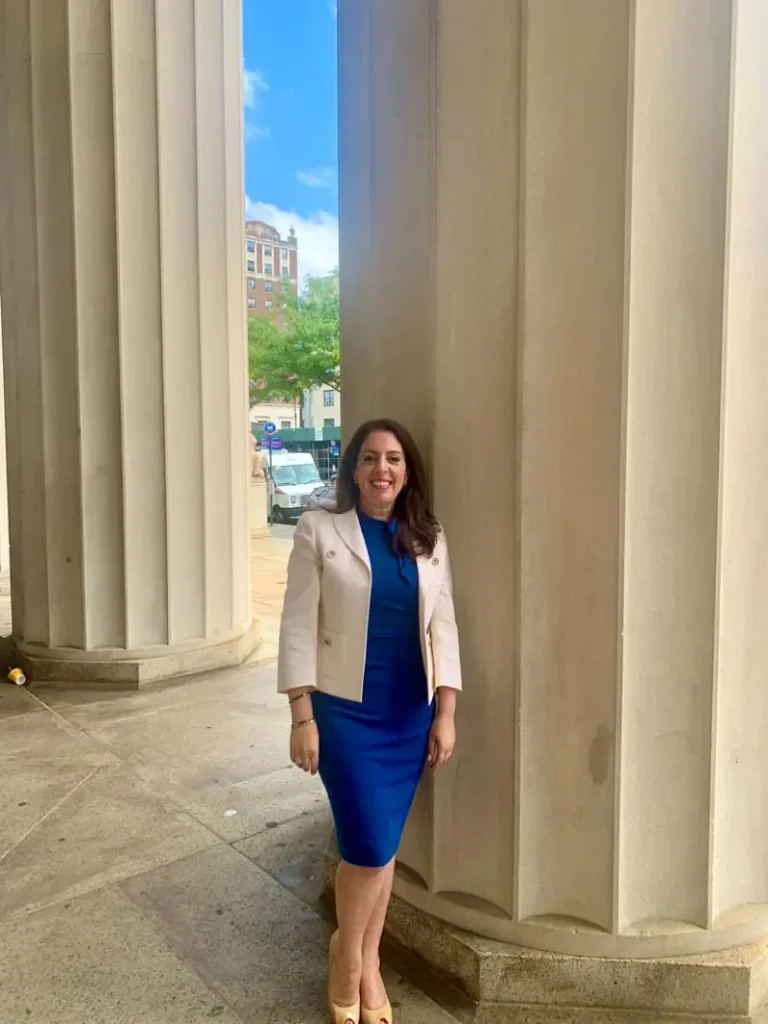
At the same time, New York family law remains unmistakably New York. Only the Supreme Court can grant a divorce, while Family Court can handle many related issues such as custody, support, and visitation. Religious divorce can also intersect with civil divorce in ways that surprise lawyers from other states, including New York’s statutory treatment of barriers to remarriage.
Jackie’s point about avoiding cookie-cutter solutions matters here. Family law is one of the clearest examples of where better templates don’t necessarily produce better lawyering. The facts are too human, and the consequences last too long.
The same is true in Vlad’s estate practice. A technically competent document is not the same thing as understanding a family, a disabled beneficiary, a second marriage, Medicaid timing, tax exposure, or what is likely to go wrong when everyone is no longer in the room to explain what they meant.
AI has arrived in the consultation, the back office, and the courtroom
AI is the obvious headline of 2026, but the interesting part is how quickly it moved from novelty to infrastructure.
Clients use it before calling a lawyer. Lawyers use it for intake, research, review, drafting, marketing, and administration. Firms are building internal policies around it. Courts are writing rules for it. Judges are sanctioning lawyers who rely on AI-generated language that sounds authoritative but isn’t actually supported by the law.
New York’s ethics guidance caught up quickly. In 2024, the New York City Bar’s Formal Opinion 2024-5 tied generative AI back to familiar duties: competence, confidentiality, supervision, candor, conflicts, fees, client communication, and advertising. In other words, the technology was new. The lawyer’s responsibility wasn’t.
Then, effective June 1, 2026, New York adopted Part 161 on the use of AI in court papers. The statewide policy isn’t anti-AI. It expressly says lawyers and parties shouldn’t be prohibited from using AI to prepare court papers, and it doesn’t impose a general requirement to disclose AI use. But courts may adopt a model part rule requiring users to understand the tool, review the work, and independently ensure that filings don’t contain fabricated cases, statutes, or other material.
The warning isn’t theoretical. In June 2026, the Appellate Division, Second Department, sanctioned an attorney $8,000 and his law firm $2,500 in Landberg v. City of New York after a brief prepared with generative AI assistance contained nonexistent cases, fictitious quotations, and misstatements of real law.
That case is easy to turn into a morality tale about careless lawyers and scary machines. But I think the more useful lesson is simpler: AI can accelerate work, but it also accelerates error. If you can produce ten times more text, you can also produce ten times more things that need judgment.
William put it simply: “The best lawyers will use AI as a tool, but they will not outsource their judgment to it.”
Vlad sees the same problem from the client side. AI can draft a respectable estate-planning document. It can analyze information quickly. What he doesn’t think it reliably has yet is intuition: the human ability to notice what the client didn’t say, what doesn’t fit, what the family dynamics imply, and which apparently minor fact changes the entire recommendation.
Technology has made the human input more valuable
The four lawyers I collaborated with for this article didn’t coordinate their answers. They practice in different fields and run different kinds of practices. Still, they kept circling the same few ideas.
Vlad emphasized human judgment. William focused on judgment, specialization, and the ability to keep fighting. Jackie stressed individualized solutions. Matt talked about service, communication, mentorship, and trust.
When research gets faster, judgment becomes even more important. When drafting becomes easier, the real value shifts to knowing what the document should say, what it should protect against, and what the first draft may have missed. When clients can compare five lawyers in an hour, responsiveness becomes part of legal service rather than an administrative courtesy. And when remote work removes the everyday learning that used to happen naturally around more experienced lawyers, firms have to recreate that mentorship through other means.

Matt said you can be the best attorney in the world, but if the client feels disconnected from the strategy, process, and team, the client can still feel lost. That sentence should probably be taped to more law-firm monitors.
It also explains something I see constantly from the law firm growth side. Firms often measure the parts of the business that are easiest to count: clicks, calls, leads, signed matters, response time. Those numbers matter, but they only tell part of the story. A person with a serious problem still has to trust the lawyer enough to hire them, stay with them, and recommend them later. That trust is harder to measure, but it has a direct effect on the numbers firms care about most.
What I’ve learned about New York’s legal community so far
I’m still new enough to New York’s legal community to notice things that people who’ve spent their whole careers here probably stopped noticing a long time ago.
The scale is the first one. Some of the most prestigious law firms in the world are headquartered here, and they share the same legal ecosystem with thousands of solo lawyers, neighborhood practices, specialist boutiques, plaintiff firms, government attorneys, legal-aid lawyers, and firms serving specific immigrant communities in several languages.
The second is how global and how local the profession manages to be at the same time. One lawyer may be working on a matter that involves companies and investors across several countries, while another a few blocks away is dealing with court practices that vary by county, judge, or courtroom. The city sits at the center of international finance and business, and practicing law here still depends on an intimate knowledge of very local rules, institutions, relationships, and habits.
The courts carry that same mix. New York brings centuries of legal history with it, including terminology and structures that look unusual to anyone arriving from somewhere else, and at the same time its lawyers and judges are working through AI, electronic filing, remote proceedings, and entirely new ways for clients to find and evaluate attorneys.
Put all of that together and you get what has surprised me most so far: New York’s legal community is enormous, fragmented, highly specialized, deeply local, and plugged into the rest of the world, all at once.
It’s a long way from the New York I imagined as a kid in Poland, which was the finished version of the American Dream. The real city is harder, messier, more expensive, more local, more regulated, and far more interesting. It’s also full of people who have been building careers, firms, institutions, and communities here since long before I ever pictured myself living here.
That keeps me honest about my role. New York lawyers know their city. My job is to learn enough about how they work to be useful to them.
That’s what Pioneerly’s New York HQ means to me. Beyond the address on the website, it’s a decision to become part of a legal market that has shaped American law for centuries and is now, like every other market, working out what modern law practice should look like.
Ten years from now, a lot of this will look different. AI will be better. Courts will be more digital. Clients will have even more information. Some current law-firm jobs will change or disappear, and new ones will appear. The firms that win will probably look very different operationally from the firms that won in 2026.
But based on the conversations I’m having with people in this community, I’d bet on one thing staying stubbornly familiar. Clients will still want a lawyer who listens, responds, understands the stakes, exercises judgment, and shows real skill when things get difficult.
New York has changed a lot over the last ten years. Good lawyering, at its core, still comes down to the same things it always has.